Archives

Rigid Heddle Brooks Bouquet

I know, I know. I’ve been away from the computer FOREVER. I’ve got all sorts of good reasons excuses. The grass needs regular mowing; I had a dump truck full of mulch delivered that has to be moved & spread, after the garden’s been weeded, of course; I did the 100 American Craftsmen show at the Kenan Center; and it’s the busiest time of the year at my paycheck job at Pfeiffer Nature Center.

Anyway, I’m committed to catching you up, a post a day, or at least every other day, on my weaving. I’m going to do it in chronological order.

I really like to demonstrate weaving at shows whenever possible, using my little Leclerc rigid heddle loom. This becomes a bit tricky for me, since I use mostly fine threads that need to be sett closer than 12 ends per inch, my finest heddle.

So for the Kenan show I chose to warp the loom with a nice variegated cotton & linen blend yarn. For the weft I used an undyed Egyptian cotton, woven in a Brooks Bouquet pattern.
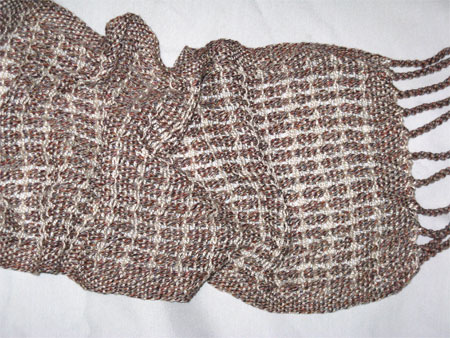
handwoven cotton & linen scarf

Once again, live and learn. I’ve done Brooks bouquet before, but always with the same weft as warp. With a different weft, the overall pattern gets very boxy looking – not my favorite visual. On the plus side, for a medium gauge cotton scarf, this one is very soft and drapes well. So I’m sure someone will like it.

I’ve got another show coming up next weekend. I’ve been debating about what I’ll warp the loom with, but haven’t made a firm decision yet. I’ll keep you posted.
Garden Lovelies

I really do love spring the best. Watching tiny spikes poke up from the ground and turn into beautiful blossoms in the matter of just a few weeks never ceases to engage me, and to make me happy.

With that said, I just want to share some of the beauty of my early June garden.

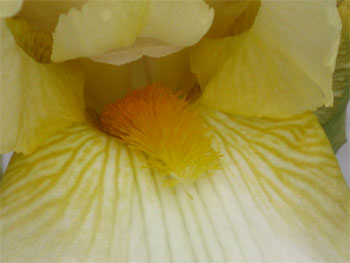
The beard of an iris looks so much like a caterpillar. Usually flowers mimic bugs to attract those bugs, but the iris isn’t pollinated by a caterpillar. Perhaps the butterflies want to care for the little fuzzy? Maybe bees want to eat it? Whatever the reason, they’re beautiful and fascinating.
iris beard

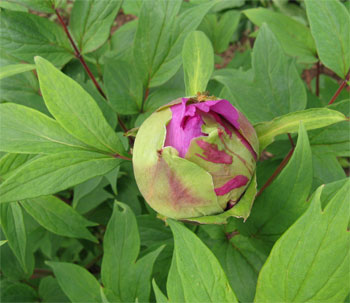
I’ve planted several tree peonies over the years. Only one survives, but it’s amazing. Here’s a bud photographed on Tuesday afternoon.
tree peony bud

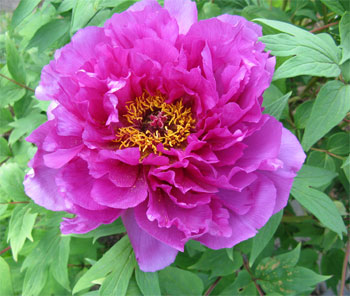
The very next day, a mere 24 hours later, that bud opened into this stunning flower.
tree peony flower

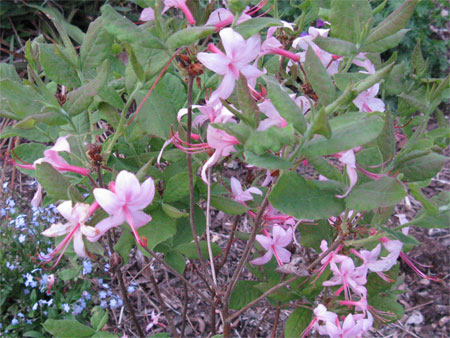
Last year I showed you my little shrub I call “the queen.” It’s a native pink azalea that has, unfortunately, been unsuccessfully transplanted from its homes by lots of people in the last few decades, dramatically reducing its number. I only moved mine because it was going to be bulldozed where it was.

So here she is in my garden in 2010 – alive, and flowering, although not strongly.
the queen, 2010

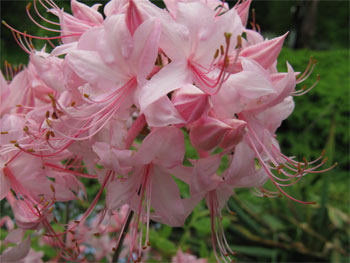
This year, she put on quite a show. Here’s a closeup of a bud cluster…the queen, 2011

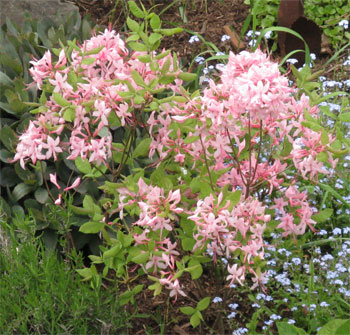
…and a more distant shot so you can compare it to last year.
the queen, entire, 2011

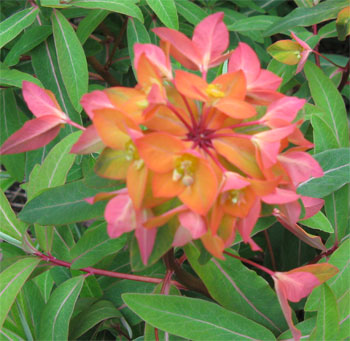
Several years ago, I planted a very colorful spurge called Fireglow. It’s sort of taking over that garden area, but is so beautiful I’ve let it.
fireglow spurge

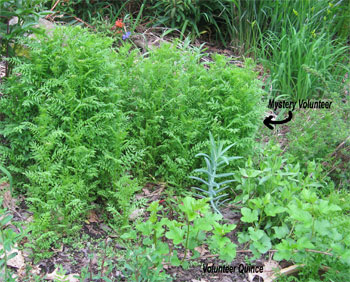
Then I have a few new volunteers this year. One, a quince, will be allowed to stay. The other, an as-yet-unnamed flower/weed/beauty/invasive, is here for now, but may be gone as soon as it flowers and I can identify it. It’s really become quite prolific in one of my gardens, no doubt because of all of our wet weather. Without being able to see its flowerheads, I’m vacillating between cowbane, fool’s parsely, and a valerian. I hope I’m not too sorry I’ve let it stay as long as I did.
garden volunteers
While my garden takes lots of my time, and my back and knees, I love doing it. Except when I’m moving many wheelbarrows full of mulch. 🙂

Your turn: what’s blooming near you?

Same, but soooo different

I really liked the potential in the weaving pattern I’d used in the orange and cream cashmere silk scarves, even though it’s extremely subtle in those scarves. So I wanted to use it again in a different fiber.

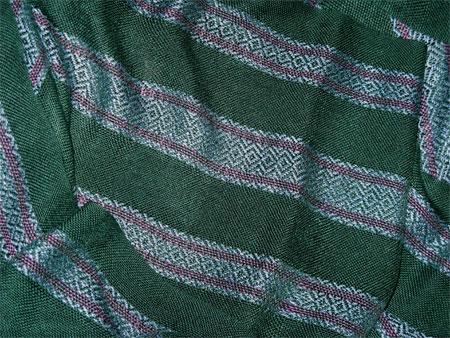
I decided on some lovely rayon I have, using a dark forest green for the majority of the warp and all of the weft, with the stripes being a pale blue offset by lavender.
handwoven rayon scarves, green stripes

If someone showed me this scarf and the orange & cream cashmere, I’d have to pay attention to see that they used the same threading & treadling pattern. That fact wouldn’t jump out at me.

Colors do funny things. That lavender turns almost completely into pink next to that light blue and crossed by the green. It’s so clearly lavender on its own, and still looked mostly lavender when I threaded the heddles.

In the end, I don’t know that I can say which finished scarf I like better; they’re so different, and each has its own charm. I’ll be interested to get customer reactions this weekend at the 100 American Craftsmen show. For which I have to go pack my clothes – right now!

Weaving Catch Up

Yes, I’ve been gardening, mowing the lawn, and making jelly, but I’ve also been weaving. What I haven’t been doing is blogging. So I’m going to cram the last 3 warps into one post.

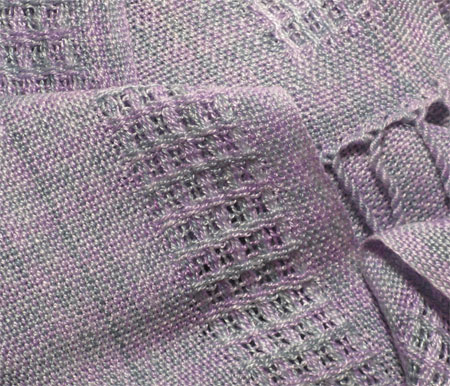
First I wove three scarves in some of Tammy’s hand painted 8/2 Tencel, in a colorway she calls Silver Linings. I used this last summer and it was popular, so decided to make some more.
handwoven rayon scarves, silver linings

These scarves have a huck lace ‘windows’ border. At least I call them huck windows. I’m sure there’s a correct name, but I don’t know what it is. I like the various versions of huck, but this is the one I use the most.

Next I went back to working with cashmere-silk yarn. My first big show of the season is coming right up — 100 American Craftsmen at the Kenan Center next weekend — and I decided I really needed to expand my cashmere-silk stock. I’d recently ordered more, and tried a few new colors. One of them was an interesting green – sort of a sage-y spring green.
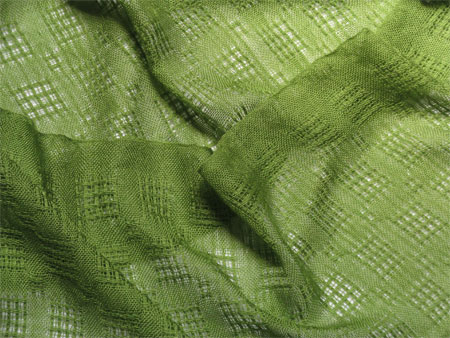
handwoven cashmere & silk scarves; green huck lace

I’ve woven huck blocks plenty of times before; this time I decided to change it up and make the blocks alternating sizes. I find this design aesthetically pleasing. As usual, I made this handwoven lace on my counterbalance loom.

Then I decided to make some cashmere silk scarves using two different colors. I spent quite a bit of time in front of my computer working out designs. The options are endless, time isn’t. So I ultimately settled on a relatively simple design that’s sections of plain weave alternating with bands of twill in a second color. I had to use my Macomber for this, as I needed 6 harnesses – 2 for the plain weave and 4 for the twill.

I set the yarn at 18 ends/inch, just as I do with this fiber for my huck lace, and started weaving. 18EPI was far too loose. Even after wet finishing, the fabric is entirely unstable.
handwoven scarf too loose

This was a case when it was totally inappropriate not to sample. Anyway, I cut it off the loom and re-threaded the reed, this time at 24 EPI.
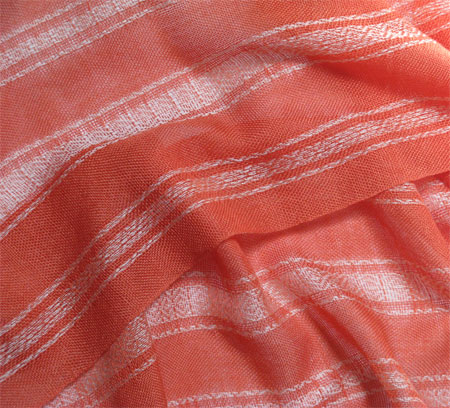
handwoven cashmere & silk scarves, creamsicle

They worked up fine at this sett, but I made notes that it could have been even closer.

I’m working on a batch of 2 scarves in rayon in the same threading and treadling pattern, using 3 colors. I need to get them off today so I can twist the fringe and have them ready for this weekend’s show.

Flower Blossom Jelly

The Naturalist at Pfeiffer Nature Center gave me a terrific idea, one that I decided to use to get a major head start on Christmas presents. Yes, I fully realize that it’s only May, but you have to do things as the Muse inspires and the season allows.

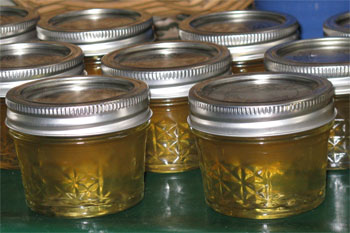
So on Thursday evening I walked around my yard and nipped the biggest yellow heads I could find from all the dandelions in my yard. I came into the house and twisted the blossoms from the stem end, then made dandelion blossom tea. After going to the grocery store on Saturday morning for some needed supplies, I made 2 batches of dandelion blossom jelly. You can get the recipe at the Nature Center’s blog.
dandelion flower jelly

I must say, it is quite a delicate flavor that is very reminiscent of honey.

Once I decided to make the dandelion jelly, I wanted to make another flower jelly, too. So while I was walking around my yard mowing the lawn Thursday afternoon, I was tasting the various blossoms. I decided my pink-flowering crabapple would be great.

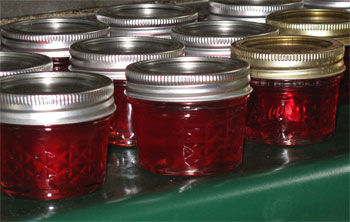
Friday evening I picked lots of crabapple blossoms & made the tea. I made two batches of this jelly Saturday morning as well. Here’s the recipe I used for this one.
crabapple flower jelly

My taste buds prefer the slightly tangy crabapple jelly.

These two recipes jelled differently. The crabapple is a more typical jelly consistency; the dandelion is softer. I can’t say if it’s because the crabapple recipe used less flower tea, because the dandelion recipe had you add the pectin up front (not standard jelly-making procedure), because one used liquid pectin and one powered, or perhaps crabapple flowers contain some of the natural pectin that’s in the fruits themselves. I will say that for both recipes I used some more tea than the recipe called for and of boiled it liquid down some, as I feared I’d make my tea too weak; that I’d poured too much boiling water over the flowers.

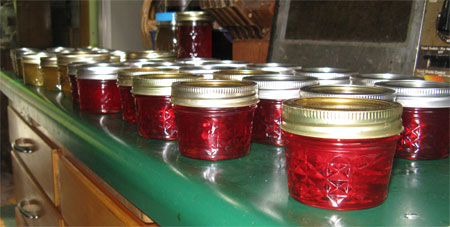
When I was all done, I had 40 jars of beautiful homemade jelly sitting on my counter, dazzling in the afternoon sun.
both jellies

Of course, you’ll want to make sure that you’re using edible flower blossoms. Most are, but some are not. If you’re not sure, do some research. Here’s a place that has some info about both edible and toxic plants; there are many other sites you could go to. Always err on the side of caution when you’re using plants you’re not familiar with.

Your turn: what’s shining in your kitchen, or brightening your yard?