|
|
I’ve been a very bad blogger, but at least I’ve been a good weaver. I have good excuses. In the space of 21 days between May 22 and June 8 I have two shows — Routes to Art and Kenan Center’s 100 American Craftsmen — a major fundraiser for Pfeiffer Nature Center where I work, and, most importantly, MY DAUGHTER’S wedding!
I won’t bore you with a post on every scarf I’ve made; instead I’ll show you the recent scarves by grouping.
Although when I’m showing new handwoven scarves to Margaret to gather local critique I always show her my favorites last, I’m going to reverse that here, and show you my favorites first.
And what are those favorites, you might ask? It’s the new Swedish lace scarves. I wove them in alternating blocks. I was initially afraid it’d look a bit like a checkerboard, detracting from the classy look I was going for.
First I did them in a fine gauge Mora wool, approximately 4,700 yards per pound (ypp).
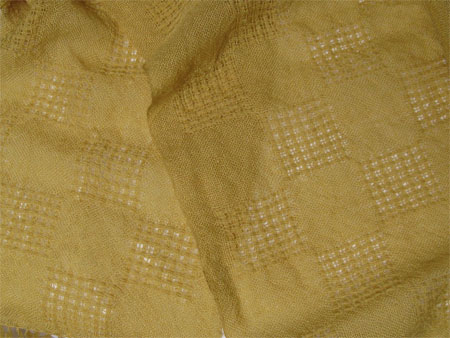
Yippee – I liked the way they looked! Although that wool is pretty fine, they look clunky compared to the next batch…
Now it was time to move to the fiber I really wanted to do them with, a VERY fine cashmere-silk blend in a lovely orange color. Â This yarn is about 6,000 ypp
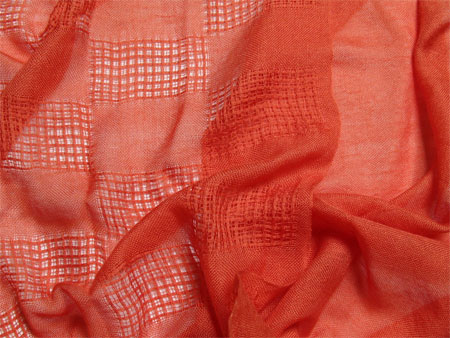
I’m not usually an orange person, but I really love these scarves. Obviously, the scarf on the left is the Swedish lace blocks, and the one on the right is a simple tabby weave. In both cases, the finished product is light as air, soft as silk, and drapes like a dream.
Like my other handwoven lace scarves, I wove these on my little counterbalance loom. I do love this vintage, handmade beauty, and use it whenever possible, and it never complains, even when I ask it to go outside its comfort zone and weave 1 harness against 3, such as when I’m making woven lace.
I took them to Routes to Art this weekend, my first show of the season, and got lots of great feedback. I will DEFINITELY be making more cashmere silk scarves! In fact, I think I’d better go order more of that yarn right now!
Every year I have phoebes build nests under my porch. I rather like to watch their active bug-catching, and I don’t think my usual outdoor activity bothers them too much.
This year is a bit different. For reasons better left unenumerated, I hadn’t yet taken down my holiday wreath, which hangs on the outside of my basement door. About 10 days ago I noticed that when I opened the basement door to exit my house, a phoebe was often flitting away in a hurry. At first I figured she just chose a place a bit too close to the door for her comfort. It took a few days for me to realize that the place was in my wreath!
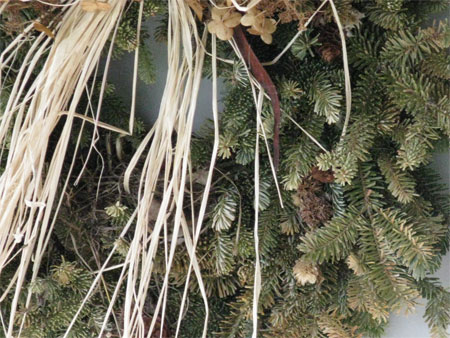
Can you see her?
No? Try this one…
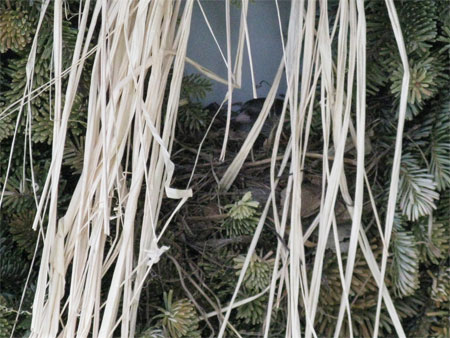
Still can’t pick her out? You’re sure to see her little profile in this one.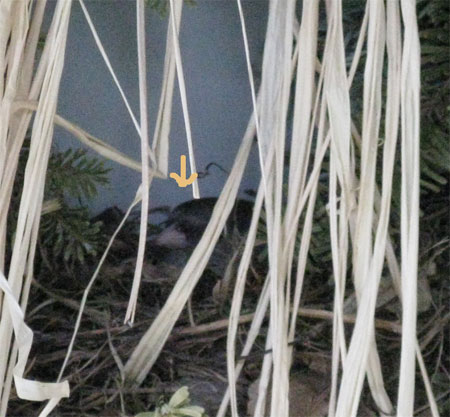
Needless to say, I’m now doing my best to go in and out using a different door, till Mama Phoebe raises this clutch of young. After they’ve flown the coop, I’ll remove the wreath and she’ll need to build a new nest if she wants a second hatch this year.
Your turn: what’s hatching near you? Also, play along with Carmi’s game – this week’s theme is spring has sprung.
I really do love my gardens. Planted over the course of three decades, I have at least 250 varieties of perennials in my yard. Interestingly, I don’t always have cut flower in my house; I’m far more likely to enjoy their beauty outside. I thought it would be nice to share a regular garden journal with you.
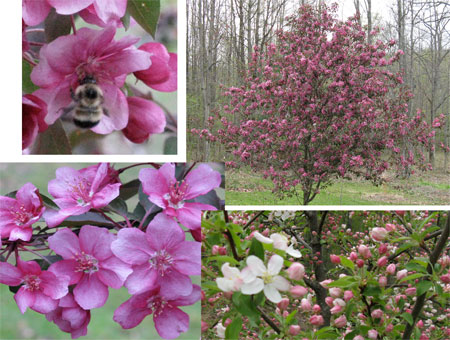
Although I should have focused on planting trees many years earlier, I did plant four different flowering crab trees around the yard. This one, Selkirk, is far and away the largest. I think part of that is variety, but most of it is location. The full tree and the two closeups at left are the Selkirk. You can see that the bees think this tree is pretty lovely, too. The white and pink buds at the bottom are a variety that the nursery didn’t have named, so I don’t know it. I call it the bridal tree, since Margaret thought it looked like a bride when she helped me plant it.
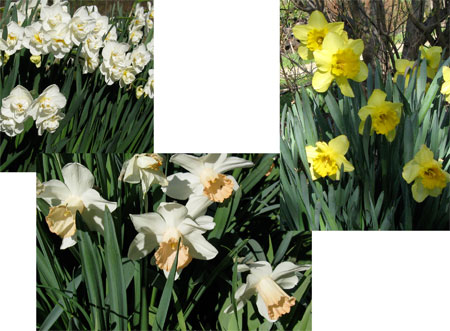
I have four or five kinds of daffodils. They don’t all bloom at the same time, but I did manage to get good photos of these three varieties. My Poet’s Narcissus, which is probably my favorite isn’t open yet (odd, I think). The little double ones on the left are pretty sweet, too.
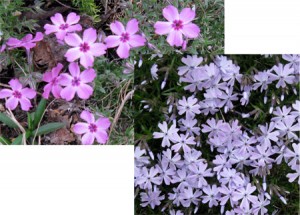
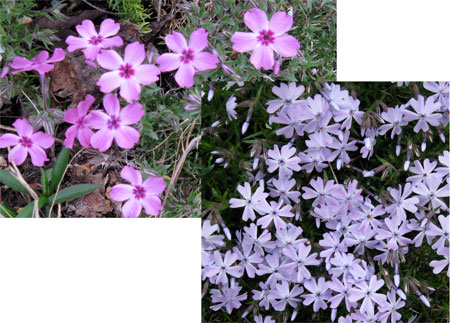
The pink creeping phlox provides a really bright spot in the garden, but I really prefer the periwinkle one. Why? In both early morning and late evening, those flowers seem to glow in the dim light, drawing my eye every time.
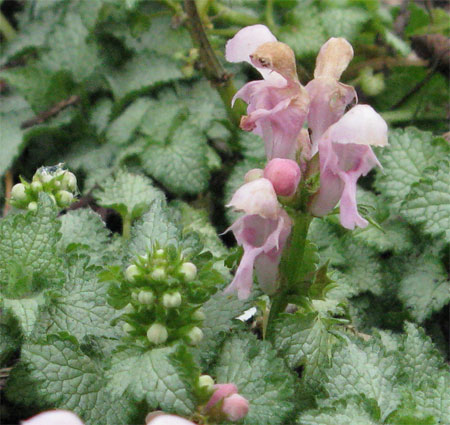
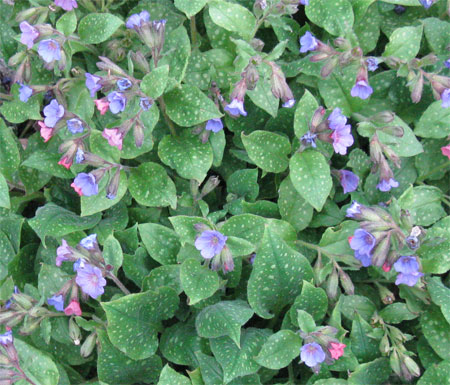
 The common name of this little sweetie is Pink Nancy. It’s one of the four varieties of lamium, or dead nettle, I have in my garden. Although far from the hardiest, this one is my favorite. Partly because it’s so pretty, and partly because I transplanted it from Amanda’s garden years ago when she was doing some garden re-design. I think I’m going to buy some more this year, if I can find it, to fill in the area I had always wanted this one to spread to. When I was a little girl, lamium fed my imagination, with each flower head resembling a tiny lady in a bonnet. The common name of this little sweetie is Pink Nancy. It’s one of the four varieties of lamium, or dead nettle, I have in my garden. Although far from the hardiest, this one is my favorite. Partly because it’s so pretty, and partly because I transplanted it from Amanda’s garden years ago when she was doing some garden re-design. I think I’m going to buy some more this year, if I can find it, to fill in the area I had always wanted this one to spread to. When I was a little girl, lamium fed my imagination, with each flower head resembling a tiny lady in a bonnet.
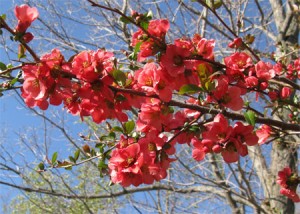
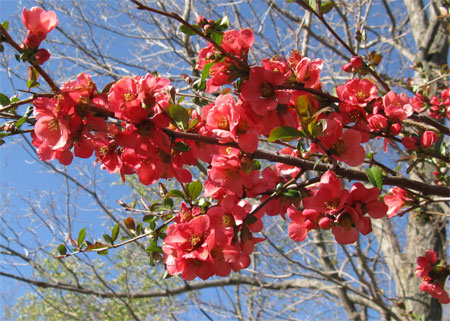
Japanese flowering quince is quite a shrub. It’s both quite hardy and really beautiful when it flowers. Mine rarely produces any quince fruits, and I wouldn’t really want to make quince jam if it did, so it works out well.
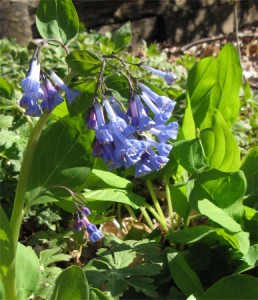
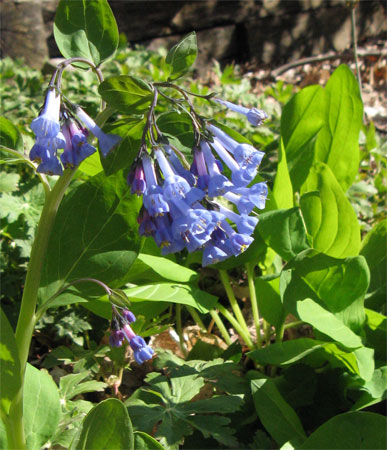
Most of my yard, and therefore my gardens, are in full sun. I’ve chosen plants that like that kind of environment. After several years of this, I worked hard to create a shady area for a garden, since some plants simply can’t take several hours of sun each day. These little beauties are Virginia bluebells. They have very tender stems and leaves, which totally disappear after flowering.
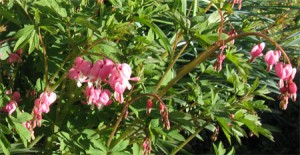
In my mind, no garden is complete without a bleeding heart. My white one blooms much later than my pink one. Personally, I prefer the more traditional pink.
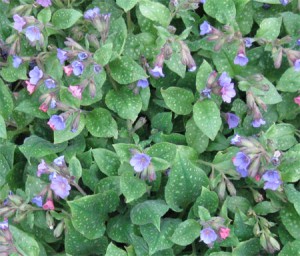
This is one of my two varieties of pulmonaria. This springtime lovely got its common name, lungwort, from the spotted leaves, which bear some resemblance to lungs. I think one this plant’s attractions comes from the way the blossom change from pink to blue as they go from buds to open flowers.
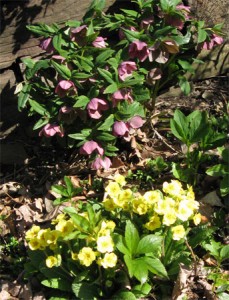
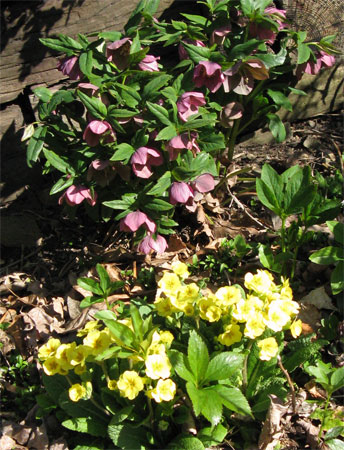
In front are some yellow primroses. Remember that old song, Primrose Lane? I think it came from these flowers, which have been developed in white, red, blue, purple, orange, and all shades of those colors. Primrose are early spring bloomers, and prefer at least partial shades. Behind the primrose are a beautiful Lenten Rose. Hellebores are sometimes called Christmas Rose. No matter what you call them, these lovelies are generally beginning to flower when there’s still snow on the ground, and unlike most perennials, they hold their flowers for a long time.
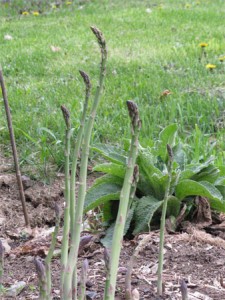
Although I plant mostly flowers, getting lots of my veggies through Canticle Farm, my local CSA, I LOVE my asparagus bed. Depending on the weather, I can sometimes harvest fresh asparagus for almost 6 weeks. YUM!
Your turn: what’s blooming in your garden?
Springtime means rain, rain means puddles, puddles mean life. I thought I’d share some views of life in the water near my house.
There’s a ditch near my house that attracts frogs, particularly spring peepers and wood frogs. Last year the wood frog tadpoles amazed me with their iridescent underbellies, and how long they took to mature. This year, I’ve been marveling at the artistry of their little community.
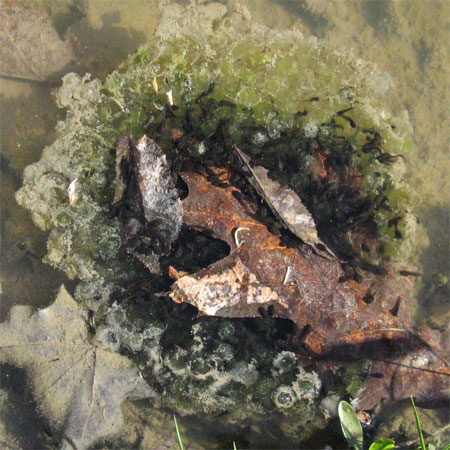 These tadpoles (actually I’m not sure if they’re peepers or wood frogs) burst out of their egg sacs, but for at least 4 days now, the majority of them have been hanging out in the center of the deteriorating sacs. I’m assuming that there are two reasons: (1) there’s safety in numbers, and (2) there’s food there. Do they eat those sacs? It looks to me like they do, but don’t assume that means its true. In any case, they make such an attractive, dense, dark spot of life in this muddy puddle, that I just have to stop and watch them on my walk. These tadpoles (actually I’m not sure if they’re peepers or wood frogs) burst out of their egg sacs, but for at least 4 days now, the majority of them have been hanging out in the center of the deteriorating sacs. I’m assuming that there are two reasons: (1) there’s safety in numbers, and (2) there’s food there. Do they eat those sacs? It looks to me like they do, but don’t assume that means its true. In any case, they make such an attractive, dense, dark spot of life in this muddy puddle, that I just have to stop and watch them on my walk.
I tried to get a good shot of the unhatched eggs that are also in this puddle, since they’re decidedly different than the frog eggs that have hatched. Susan, Pfeiffer Nature Center’s Naturalist, has finally taught me to identify the difference between frog eggs & salamander eggs, and there’s no doubt in my mind that the remaining eggs are from salamanders, but I sure don’t know what type. In any case, the puddle is so muddy that the egg masses are completely covered with silt, and therefore didn’t photograph well. 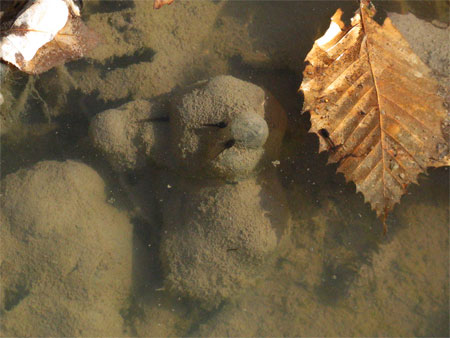 I considered trying to wipe one off, but thought I should leave nature to her own devices. You can make out some blobs here, with the frog tadpoles on top of the salamander egg masses. I considered trying to wipe one off, but thought I should leave nature to her own devices. You can make out some blobs here, with the frog tadpoles on top of the salamander egg masses.
I moved from the ditch to my small pond. Â Also muddy, my pond is always writhing with mature spotted newts in the spring, who just can’t seem to get enough of laying eggs. Â I guess they know that a huge percentage of their babies make meals for the large mouth bass and bluegill in the pond, so have to hedge their bets pretty heavily.
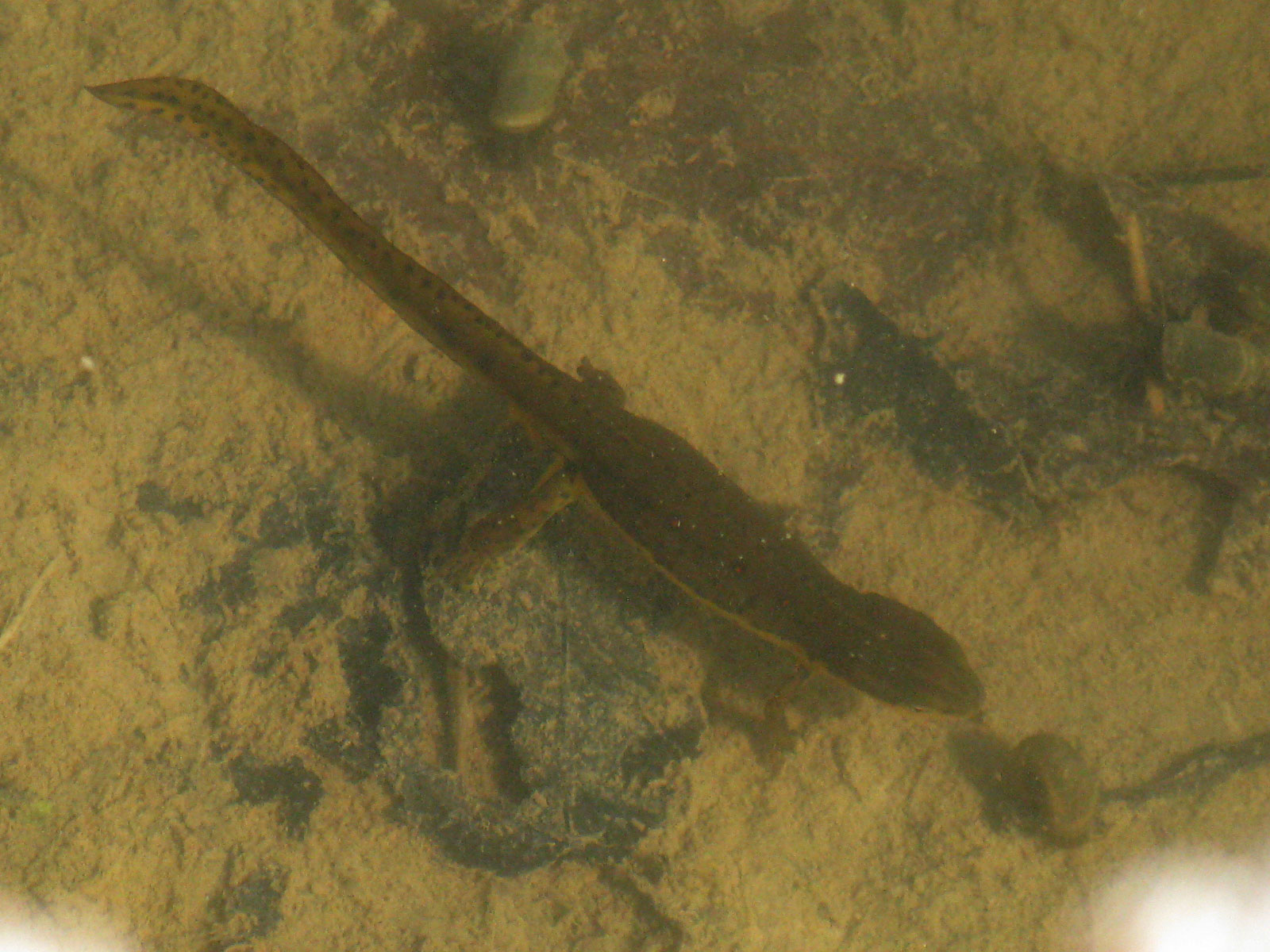
I really love the immature stage of these little guys, commonly called red efts. They’re bright orange with black-ringed spots down their backs. And they’re terrestrial little guys. It takes them 5 years to mature enough to darken their color and head back to the pond to mate. Ever since I was a kid I’ve loved picking them up, since they’re dry and feel really sweet in my hand. I learned just a few years ago that this is dangerous for the efts. Since they breathe through their skin, the oils from our hands can clog their pores and cause them real difficulties. So now I just bend down and watch them on the ground.
My pond is also growing quite a crop of snails this year. I don’t remember seeing them in prior years, at least not in these numbers. But maybe I just wasn’t paying attention. If you look closely, you can also see a snail by the nose of the salamander in the prior picture.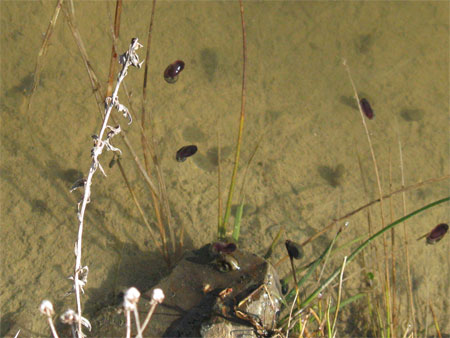
I must admit, far and away my favorite picture in this series of water sustaining life this one.
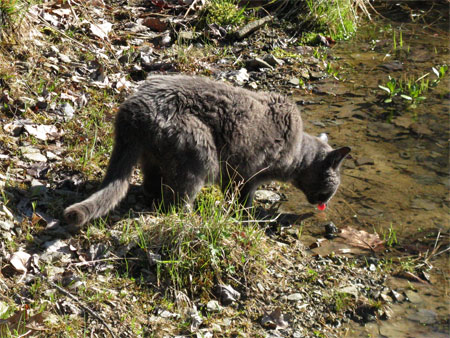 While I was trying to snap a decent fish photo, Magic wandered down to the pond for a drink. I just love the fact that I even managed to get his little pink tongue reaching out to toward the water. While I was trying to snap a decent fish photo, Magic wandered down to the pond for a drink. I just love the fact that I even managed to get his little pink tongue reaching out to toward the water.
Your turn – what’s in the water near you?
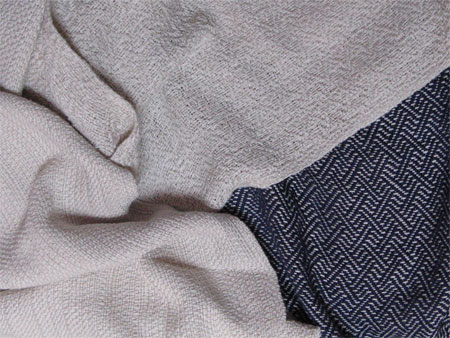
This is another set of three bamboo scarves I’ve recently woven. I just love working with Bambu 7 – it’s so smooth and silky, so easy to wind on the back beam, and finishes so nicely.
On the downside, the 100% bamboo yarn does split easily, so I have to pay attention when I’m threading the heddles and reed to make sure my hook doesn’t split it. Also, I have to finish it with a double twisted fringe or the yarn poufs out into a bamboo afro that doesn’t please me. But I like its look so much that these are minor issues.
These three scarves all have a solid ecru warp, and all share the same threading sequence. Â I wove the scarf on the right with a solid navy weft, which is what I threaded for, to get that interesting overlapped twill design. Â I like it okay, but it’s not my favorite handwoven scarf, and I don’t know that I’ll do it again.
The other two are much classier, at least to my eye. Â Both have the same solid ecru weft, and as I mentioned the same threading at the navy one. I experimented with a variety of treadling patterns using my PCX computer program, and came up with these two, both of which please me.
The scarf on the top is my favorite, with a somewhat complex twill design. The complexity of the twill not only adds visual interest, it makes this handwoven scarf AMAZINGLY soft and flexible.
On the left is a beautiful scarf as well, with a weaving pattern that ended up producing a very classic look, particularly in this solid ecru color. This one happens to be Margaret’s favorite of the batch. It really is lovely; I just prefer the one that drapes a bit better.
I’ve gotta get back to the loom now, but tell me, which one do you prefer?
|
|